

Your Headlights Are Probably Worse Than You Think
You notice it on someone else’s car first. That foggy, yellowed lens that looks like it’s been soaking in cloudy water for a decade. Then you walk around to your own car one morning, crouch down to check a tyre, and — oh. Oh. That’s you.
Oxidized headlights creep up on you. They’re the kind of problem that happens gradually enough that you stop seeing it. But once you really look, you can’t unsee it. And more importantly — once you understand how much light output you’re losing through those fogged-up lenses, you start to care a lot more than you expected to.
Quick answer: Headlight restoration works, it’s cheap, and for most people it’s the right call before jumping to full replacement. A good restoration — whether DIY or professional — can recover 80–90% of lost light transmission on moderately oxidized lenses. It won’t last forever, but done properly, it buys you years.
What’s Actually Happening to Your Headlights
The lenses on modern cars aren’t glass — they’re polycarbonate plastic. That material is great for withstanding impacts, but it oxidizes when exposed to UV radiation over time. The clear protective coating breaks down, the plastic beneath starts to yellow, and you end up with lenses that scatter light in every direction except where you need it.
That scattered, dimmer light isn’t just ugly. It’s a real hazard. Studies from the AAA (worth verifying the specific figures, as they update their research periodically) have suggested that badly degraded headlights can reduce visible range to a fraction of what new lenses produce — sometimes putting effective illumination at well under half the original distance. On a rural road at night, that’s the difference between seeing a deer and not seeing a deer.
So this isn’t vanity. Or it’s not only vanity.
Restoration vs. Replacement: The Honest Comparison
Here’s what most articles bury in paragraph seven: restoration isn’t always the right answer.
It works brilliantly on lenses that are yellowed, hazy, or lightly pitted. If you can feel the oxidation but the plastic underneath is intact, you’re a good candidate. Give it three to six months and the difference can be dramatic.
It doesn’t work well if:
- The lens is cracked or crazed with deep internal fractures
- The fogging is coming from inside the housing (moisture ingress — a different problem entirely)
- The plastic has degraded past the point where sanding can recover a smooth surface
In those cases, you’re looking at replacement. And yes, depending on the car, that can run anywhere from £80 to £400+ per side — which is exactly why restoration is worth trying first.
How Restoration Actually Works
The process isn’t magic. It’s basically controlled abrasion followed by UV protection.
Step one: sand off the damaged layer. You work through progressively finer wet sandpaper grades — typically starting around 400 grit, moving through 800, 1500, 2000 — to remove the oxidized surface down to fresh plastic. This is the part people rush, and rushing it is why DIY jobs sometimes look worse than they started.
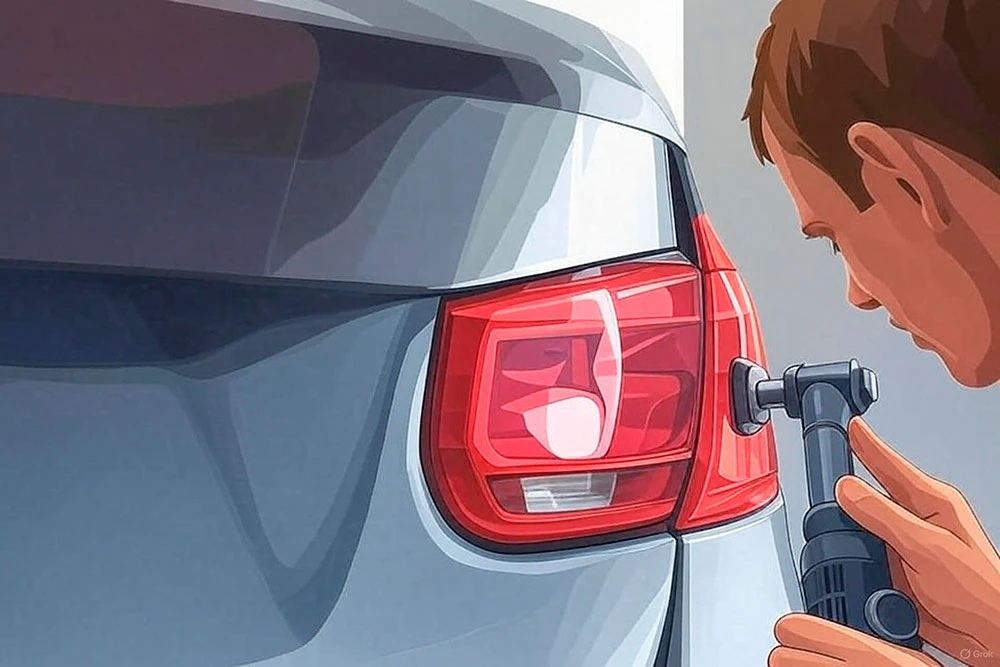
Step two: polish to clarity. After sanding, the lens looks like frosted glass. A polishing compound brings it back to transparent. Some kits include a drill attachment to speed this up; whether that helps or hurts depends on your technique.
Step three: seal and protect. This is the step that determines how long the restoration lasts. A proper UV sealant — applied correctly, allowed to cure properly — can hold the restoration for two to five years. Skip this or apply it in direct sunlight on a hot panel and you’ll be back to square one within six months. I’ve seen people blame the kit when the problem was a lazy final step.
DIY Kit vs. Professional Service: Which One Are You?
Both have their place. Here’s how to think about it.
DIY makes sense if you’ve got an afternoon, a patient disposition, and two lenses that are moderately oxidized. Kits from brands like Meguiar’s or 3M run £15–35 and, used properly, produce genuinely good results. YouTube the specific kit you buy — the technique matters more than the product.
A professional makes sense if the oxidation is severe, you’ve got a car you care about aesthetically, or you just don’t want to spend three hours in the driveway. Mobile restoration services — which have proliferated over the last few years — typically charge £50–80 for both headlights. That’s still a fraction of replacement cost. Many detailers now offer this as a standard upsell, which means you can often bundle it with a valet and negotiate the price down a bit.
The honest truth: a skilled professional will almost always do a better job than a first-time DIYer. If you’ve done it before and you know what you’re doing, DIY is great value. If you’ve never done it, the results can be… variable.
Starting a Headlight Restoration Business (If That’s Why You’re Here)
The rise of mobile restoration services makes sense from a business angle. Low startup costs, no premises needed, high perceived value versus the price charged. If you’re thinking about this as a side hustle or a full operation, a few things worth knowing:
The margin is real, but the reputation is everything. A restoration that looks great in the driveway and starts yellowing again in two months is worse than not doing it — because that customer tells people. The sealant step, done properly, is what separates the operators who build recurring business from the ones who don’t.
Before-and-after photos are your entire marketing strategy. The visual difference between an oxidized lens and a restored one is striking enough that a decent phone photo does the selling for you. Instagram and Facebook local groups are where this business lives.
Mobile service is the right model for most markets. People don’t want to drop their car somewhere and wait. Coming to their driveway or workplace removes every friction point from the customer’s perspective.
Know when to say no. Quoting a restoration on a lens that needs replacement is how you end up doing a job that looks bad and arguing about a refund. Look at the lens before you commit to a price. Cracked, internally fogged, or severely crazed? Explain why replacement is the better option and refer them on. That honesty builds trust faster than anything else.
Common Mistakes (The Part People Always Skip Reading)
Using the sealant in direct sunlight. The panel needs to be cool and clean. Hot surfaces cause the coating to flash-dry unevenly. Do it in shade, early morning or evening if possible.
Stopping too early in the sanding stages. If you skip from 800 to 2000 grit because it looks “good enough,” you’ll have micro-scratches in the surface that show up under the finished sealant. Work the progression.
Not taping off the paint. The sandpaper and compounds will dull the surrounding paintwork if you’re not careful. Tape generously. It takes ten minutes and saves a headache.
Assuming one restoration lasts forever. It doesn’t. Budget for a light maintenance pass every couple of years — it’s much easier than starting from scratch.
The Bottom Line
Headlight restoration is one of the few car maintenance jobs where the cost-benefit calculation is genuinely obvious. If your lenses are yellowed and your car is otherwise in good shape, restoration is almost always the right first move. It’s cheap, it works, and the safety improvement is real — not cosmetic fluff.
If you’re going the DIY route, buy a kit with a proper sealant, watch a tutorial specific to that kit, and don’t rush the sanding stages. If you’re paying someone, ask what they use for the final coat and how long they expect it to hold. If they can’t answer that, find someone else.
And if you’re thinking about starting a business doing this — the market is there. The bar isn’t high. Clear results, honest advice on what you can and can’t fix, and a decent phone camera for the before-and-afters. That’s most of what you need.
Check your headlights tonight. Seriously — go look at them under a streetlight. If they’re hazy, you already know what to do.

